Quick Answer: Zirodelta is a Solana-based DeFi protocol that automates funding rate arbitrage to generate market-neutral yield. By taking the opposite side of imbalanced perpetual futures markets, it captures funding fees while maintaining delta-neutral positions. With features like real-time funding scanners and sentiment tokens (PFRT/NFRT), it's ideal for DeFi investors seeking yield without price exposure. The protocol operates on a fee model with its native $ZDLT token rather than monthly subscriptions.
Crypto markets are defined by chaos. One minute you're up 20%, the next you're liquidated by a sudden wick. For serious investors, the holy grail isn't chasing "moonshots"-it's finding reliable, market-neutral yield that works regardless of whether the chart goes up or down.
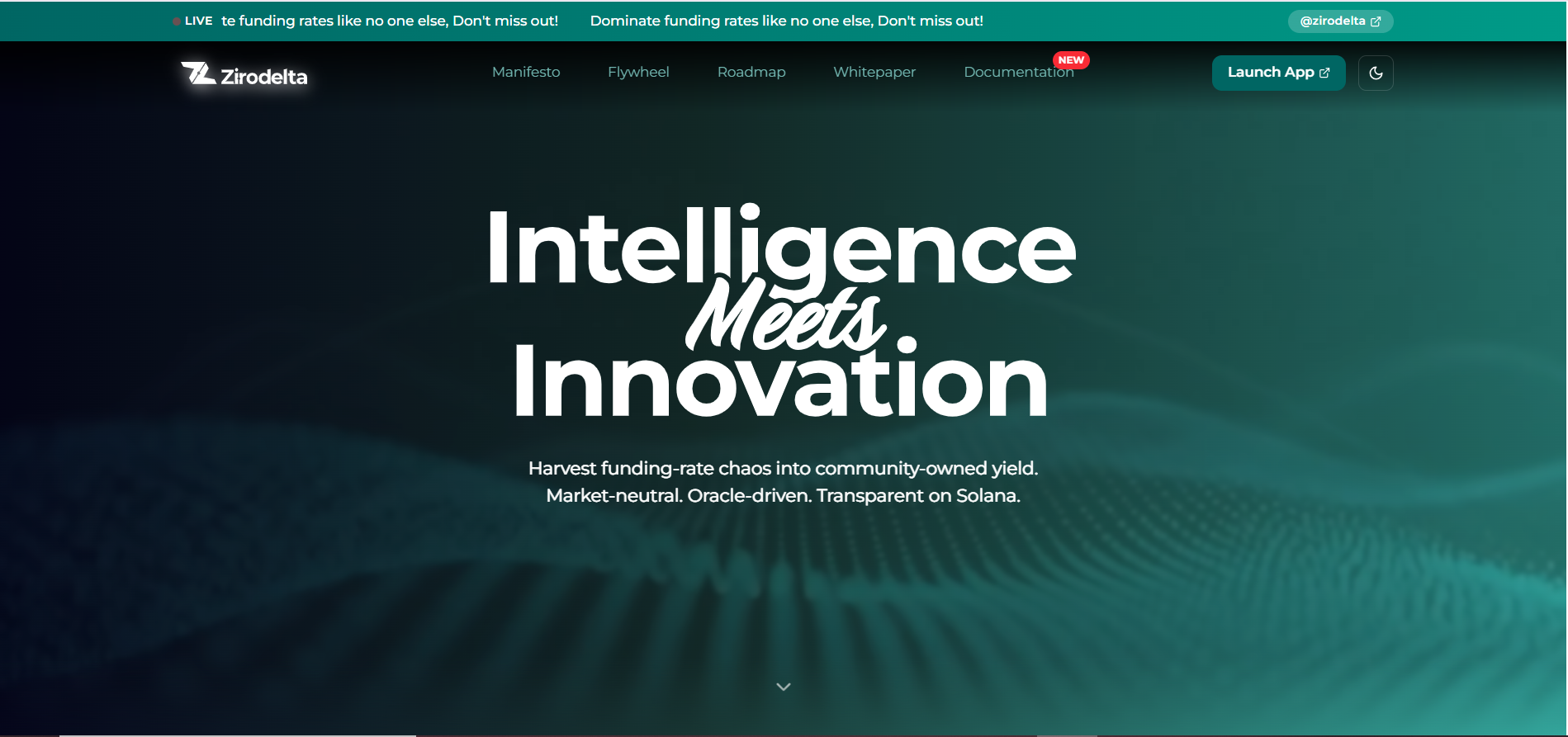
Zirodelta claims to have solved this by harvesting the "funding rate chaos" of the crypto market. By automating complex arbitrage strategies on Solana, it promises to turn market volatility into community-owned wealth.
But is it actually safe, or just another complex DeFi protocol waiting to implode?
In this review, we break down Zirodelta's mechanics, the team behind it, and whether it deserves a spot in your portfolio.
Zirodelta is a decentralized protocol built on Solana that specializes in "Conditional Finance." At its core, it is a yield-generating machine that uses oracle-driven automation to capture funding fees across various exchanges.
In simple terms, when perpetual futures markets are imbalanced (e.g., too many longs), traders pay a "funding rate" to shorts. Zirodelta automates the process of taking the other side of these trades to collect those fees, aiming for a "delta-neutral" position where you make money from the fees, not the asset price.
It features a Funding Rates Webapp that scans for these opportunities in real-time and executes them using Solana's high-speed, low-cost infrastructure.
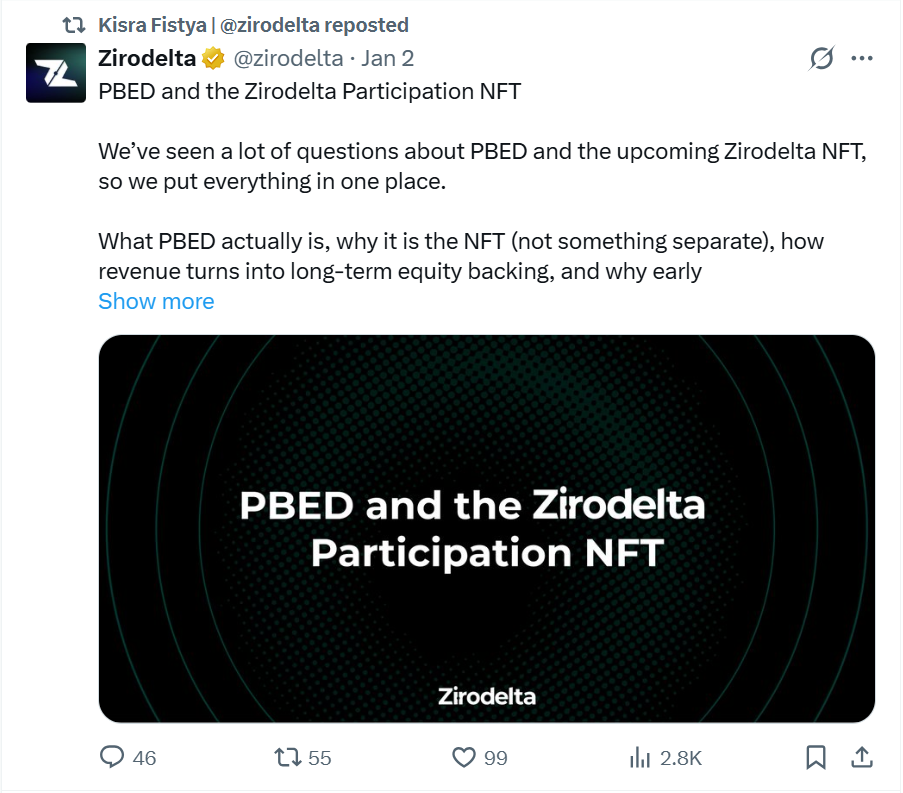
Unlike many anonymous DeFi projects, Zirodelta is led by Kisra Fistya, an Indonesian entrepreneur with a background in distressed assets.
Kisra discovered inefficiencies in crypto funding rate markets that major institutions were overlooking. He pivoted from traditional finance to build Zirodelta, scaling the project from a solo endeavor to an 8-person team. His public presence (recently featured on The Wise Ones podcast) adds a layer of accountability often missing in the Solana ecosystem.
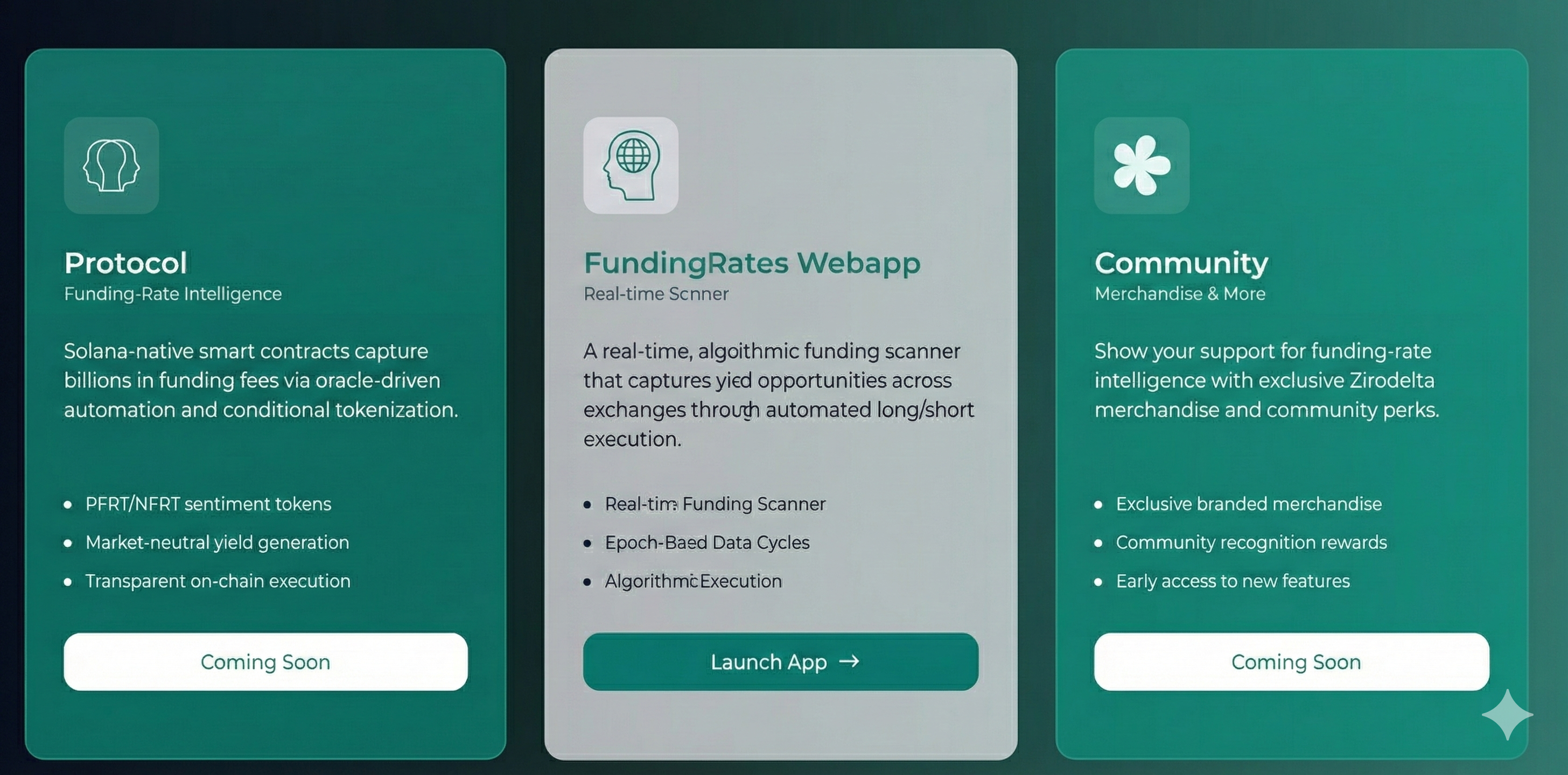
Zirodelta offers a few distinct tools for the DeFi power user:
- Real-Time Funding Scanner: An algorithmic scanner that monitors exchanges 24/7 to find the highest funding rate yields. It executes long/short strategies automatically to capture the spread.
- Sentiment Tokens (PFRT/NFRT): These allow users to speculate on the sentiment of the market (Positive Funding Rate Token vs. Negative Funding Rate Token) without taking direct price exposure to the underlying assets.
- Market-Neutral Architecture: The protocol is designed to be "delta-neutral," meaning it aims to protect your principal investment from market crashes while generating yield from the volatility itself.
Industry Context: According to The Block's Data Dashboard, annualized funding rates on Bitcoin perpetuals can often exceed 20-30% during bull runs, making funding rate arbitrage one of the most lucrative "low risk" strategies in crypto.
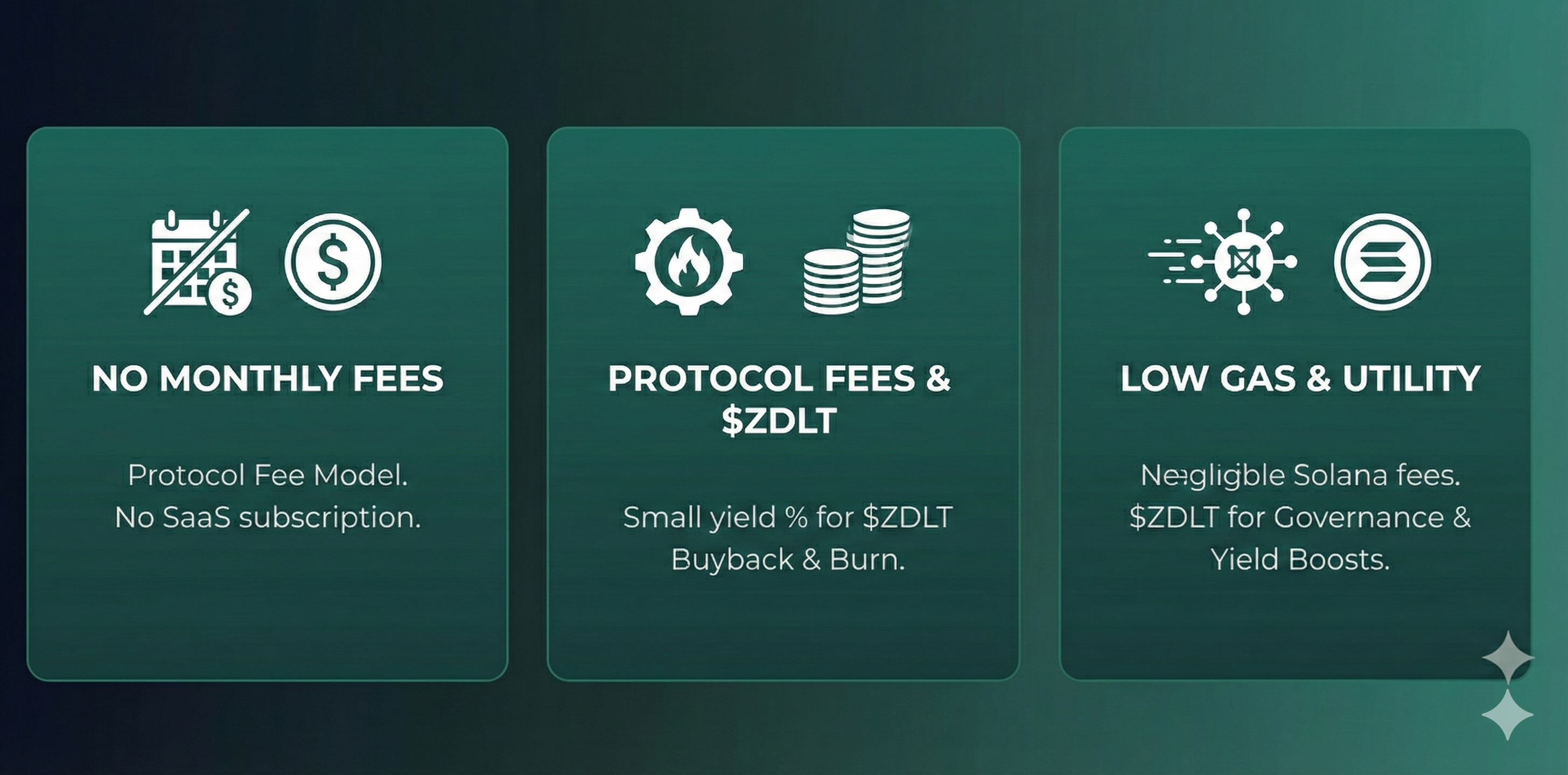
Zirodelta does not charge a monthly SaaS subscription. Instead, it operates on a protocol fee model and utilizes its native token, $ZDLT.
- Protocol Fees: A small percentage of the yield generated by the automated strategies is taken by the protocol to buy back and burn $ZDLT or distribute to stakers.
- Gas Fees: Built on Solana, transaction costs are negligible (fractions of a cent).
- Token Utility: Holding $ZDLT governs the protocol and may boost yields or reduce fees on the platform.
Zirodelta isn't the only player in the "yield farming" game, but it has a unique niche:
- Ethena (USDe): The massive Ethereum-based competitor that also uses a "delta-neutral" strategy to generate yield. Difference: Zirodelta is Solana-native and focuses on "conditional" sentiment tokens, not just a stablecoin wrapper.
- Jupiter: The leading aggregator on Solana. While Jupiter offers perpetual trading, it doesn't automate funding rate arbitrage for the user in the same specific way Zirodelta does.
- Kamino Finance: Offers automated liquidity vaults on Solana. Difference: Kamino focuses on DEX liquidity provision (AMMs), whereas Zirodelta focuses on Funding Rate arbitrage.
If you are looking for a "set it and forget it" way to earn yield on Solana without betting on the price of SOL going to $1000, Zirodelta is a compelling tool. It democratizes institutional-grade strategies that were previously only available to hedge funds.
The transparency of the team and the speed of Solana make it a top contender for the "DeFi 2.0" wave.
You use tools like Zirodelta to stop losing money to market volatility. But if you run your own digital business, whether it's a paid crypto signal group, a SaaS, or a mastermind are likely losing money to a different enemy: Payment Fraud.
As your business grows, "friendly fraud" (customers disputing legitimate charges) and trial abuse can bleed 10-20% of your revenue.
1Capture is the "market-neutral" protection layer for your Stripe account. It stops revenue leakage before it happens.
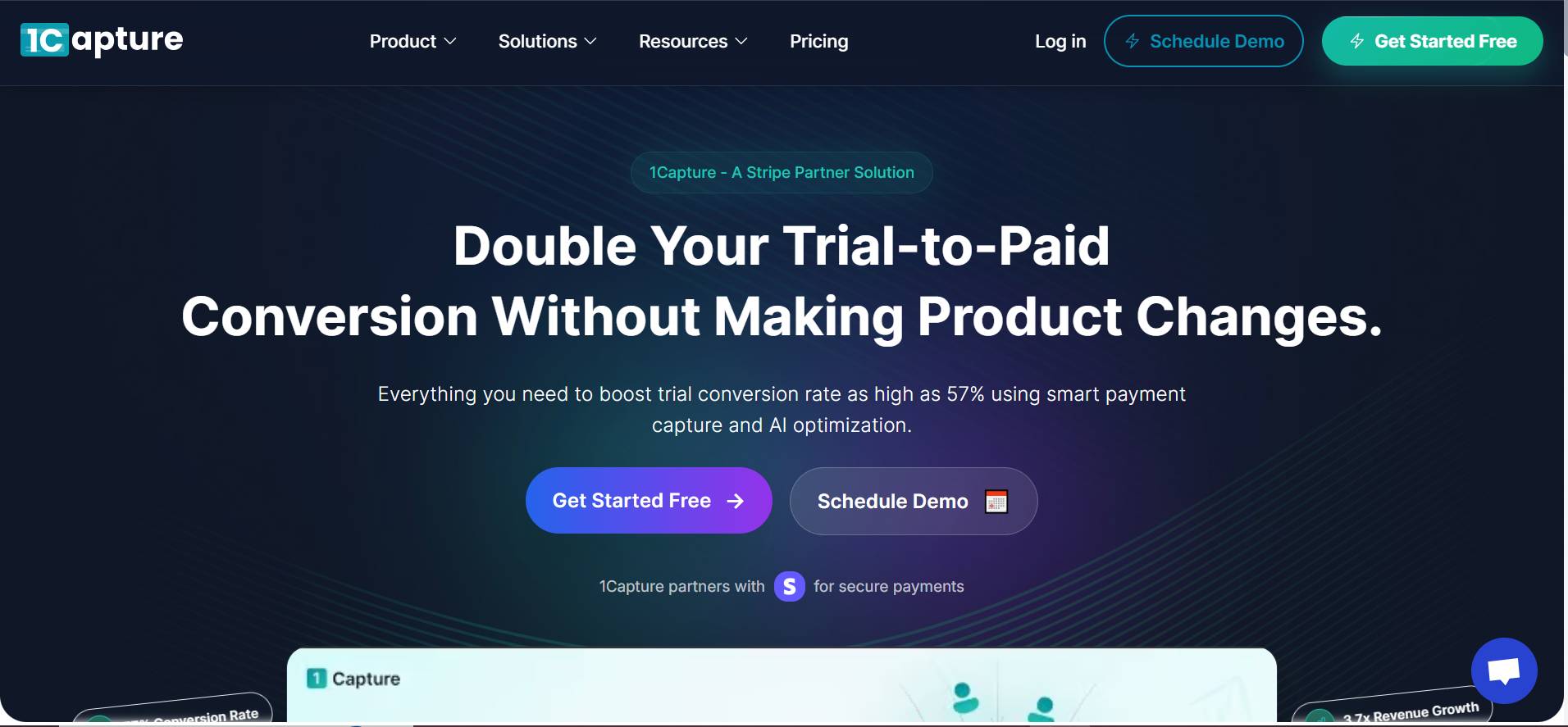
- 5-Minute Setup: Connects directly to your Stripe account with no coding.
- Stripe Partner: Fully verified and secure.
- Blocks "Serial Disputers": 1Capture identifies users who historically abuse chargebacks and blocks them from signing up.
- Smart Charge Technology: Uses pre-authorization checks (like a hotel) to ensure a card has funds before granting access, eliminating failed payment churn.
Founders using 1Capture have reported a 3.7x increase in recovered revenue.
Don't let your hard-earned business revenue vanish while you're busy watching the charts.
Protect your SaaS revenue with 1Capture or learn more at the 1Capture Blog.